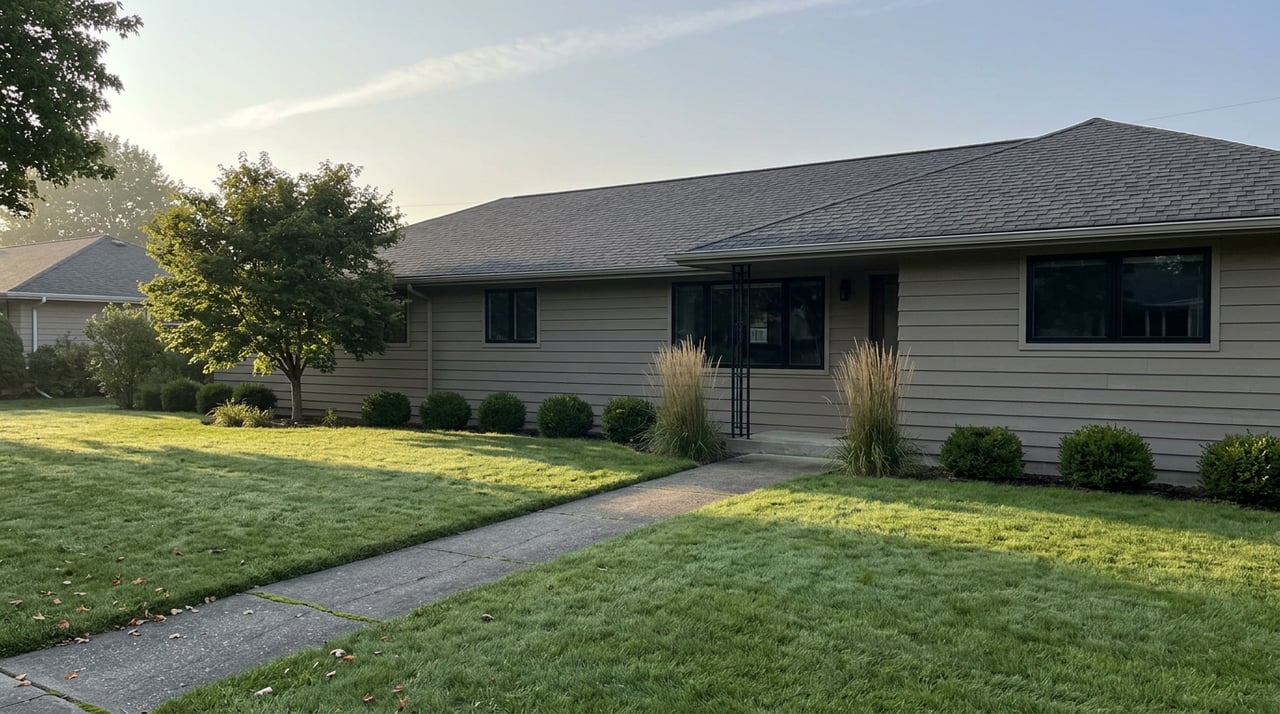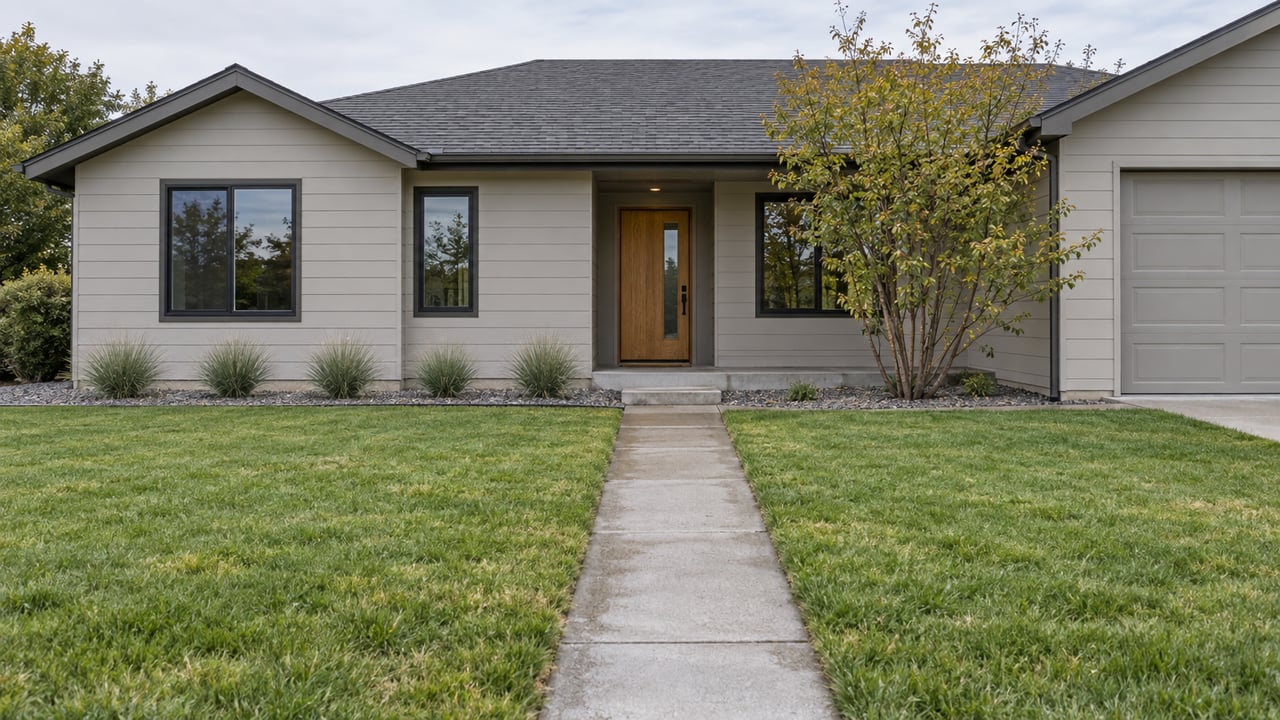
Drive through Danskin Ridge, one of Kuna's older large-lot subdivisions, and nothing on the surface tells you which houses pay a monthly sewer bill and which ones have a tank buried in the side yard. But city records tell a different story. The first phase of Danskin Ridge went in with individual septic systems for every lot. Later phases, numbered 2, 3, and 5, were annexed into the city on different terms, and that annexation record is what determines whether a given house connects to municipal sewer or still relies on its own drain field. Same subdivision name, same era of construction, two different wastewater realities depending on which phase you're standing in.
That split isn't a historical footnote. It's the exact kind of detail a buyer needs before writing an offer and a seller needs before setting a price, because Kuna's wastewater map is being redrawn right now, and not evenly.
Three Systems, Not One
Part of the confusion in Kuna comes from the fact that the city runs three separate water-related systems, and it's easy to assume they're all the same thing. There's domestic water, delivered through city wells for drinking and household use. There's pressurized irrigation, delivered through the Kuna Municipal Irrigation System for outdoor watering, which draws from the Boise-Kuna and New York irrigation districts and typically starts flowing in mid-to-late April each year. And then there's wastewater, which in Kuna means either a connection to the city's sewer mains and lift stations or a private septic system the homeowner owns and maintains alone.
A house can be on city domestic water and still be on a private septic tank. It can also be on city sewer while pulling irrigation water from a homeowners' association pond rather than the municipal system. None of these three systems track with each other automatically, and none of them show up clearly from the street. The only way to know which combination applies to a specific address is to ask, and the city's own utility and irrigation pages are the starting point for that question.
What Idaho Actually Requires You to Disclose
Here's the part that catches people off guard during a transaction. Idaho does not require a septic inspection at the state level before a home sale closes. Central District Health, which permits and tracks septic systems across Ada and Boise counties, is clear that inspection requirements at the point of sale come from individual counties and lenders, not a blanket state law. A mortgage survey to check the well and septic system is often requested by the lender rather than mandated by the state itself.
That means the strength of your protection as a buyer depends entirely on your loan type and your lender's standard practice, not on a uniform Idaho rule. A cash buyer or a buyer with a lender that doesn't require the check could close on a Kuna home without ever having the septic system formally inspected. A pre-sale inspection is not legally required in every case, but given that a failed drain field in this region can run into thousands of dollars to repair, skipping it is a real risk rather than a technicality.
A Fifteen-Day Market Doesn't Leave Room to Guess
This disclosure gap matters more in Kuna right now than it would in a slower market. Intermountain MLS data for closed residential sales in August 2026 showed Kuna posting the sharpest drop in days on market of any city in the valley, down nearly half from the year before to about 15 days, alongside a 7.0% jump in median price to $475,000 and a 16.3% increase in closed volume to 107 sales. The sold-to-list ratio held at 99.6%, meaning homes are closing at essentially full asking price.
A market that turns over in two weeks doesn't give a buyer much runway to independently research whether a specific address sits on septic or sewer, let alone to schedule and receive results from a separate inspection before the offer deadline. In a slower market, a buyer might build in extra due diligence time as a matter of course. In Kuna's current pace, that step has to be intentional, because the market itself won't hand you the time.
Where the Sewer Line Is Headed Next
The reason this is worth tracking closely in Kuna specifically, rather than treating it as generic advice, is that the city's wastewater capacity is expanding on two fronts at once, and both are recent.
The larger of the two is industrial. Meta's data center project in Kuna triggered a public works buildout that included six miles of water conveyance, five miles of sewer conveyance, a 10,000-square-foot administration building and water pump station, two million gallons of potable water storage, and two new municipal wells, according to the engineering firm that designed the project. That buildout was sized for industrial demand, but it also changes the capacity math for the city's water and sewer systems more broadly, in a city whose population had already reached roughly 28,000 residents by the time the project was underway.
The second front is residential infrastructure planning, and it's more directly relevant to homeowners. At a city council budget workshop covered by local reporting in June 2026, Kuna's Public Works Director laid out a list of FY27 capital projects that included a water main extension between East Deer Flat and Deerhorn, a phased meter-replacement program covering roughly 5,000 small residential meters, a new well sited in the Falcon Crest development, and a multi-year Mason Creek trunk sewer project running about 5,000 feet of 36-inch gravity sewer out toward Swan Falls High School. Each of those projects marks a specific direction the city is extending service, and each one is a signal for where currently septic-served parcels might eventually gain a sewer connection option, and where they won't for the foreseeable future.
None of this means every Kuna subdivision on septic today will be on sewer next year. It means the map is actively shifting in named, budgeted directions, and a property near one of these project areas is in a very different position than one on the opposite side of town.
The Price of Finding Out
The cost difference between the two systems is not trivial, and it shapes how a buyer should think about negotiating and how a seller should think about pricing.
| City Sewer | Private Septic | |
|---|---|---|
| Who's responsible for maintenance | City of Kuna, funded through utility billing | Homeowner, out of pocket |
| Routine cost | Monthly utility bill | Pumping roughly every 3 to 5 years, typically a few hundred dollars per visit |
| Failure cost | Municipal responsibility | Drain field repair or system replacement, which in Ada County's slow-draining soils can run from around $5,000 to $20,000 or more depending on whether a standard or an alternative system is required |
| Sale-time inspection | Not typically required | Not mandated by the state, but often required by the lender or county |
New septic installations in Ada County tend to run higher than in areas with better-draining soil, because local soil is classified as poor for percolation, which often pushes a new system toward a mound or aerobic design rather than a standard gravity system. Converting an existing septic-served property to city sewer, where a line is available nearby, typically falls somewhere in the range of a few thousand dollars for a straightforward hookup close to the main up to well into five figures once the old tank has to be decommissioned and a longer trench has to be dug.
For a buyer, that range is worth pricing into an offer if the home is on septic and the system's age or condition is unknown. For a seller, having a recent pumping record or inspection report ready removes one of the more common points of friction that slows down a closing timeline that is otherwise running around 15 days.
Before You Write the Offer or Sign the Listing
- Ask the listing agent or the city directly whether a specific address is on city sewer or private septic. Don't assume based on the subdivision name or the age of the neighborhood.
- If the home is on septic, ask for the most recent pumping or inspection record before you're deep into a short closing timeline.
- Check whether the property falls near one of the city's named capital projects, such as the Mason Creek trunk line or the Falcon Crest area, since that can indicate whether sewer access is a near-term possibility or not on the horizon at all.
- If you're selling a septic-served home, having documentation ready ahead of listing removes a step that otherwise has to happen fast in a market moving this quickly.
FAQ
How do I find out if a specific Kuna address is on septic or city sewer? The city's utility billing office can confirm whether an address is connected to municipal sewer, and Central District Health maintains septic system records for properties across Ada and Boise counties going back to 1971, though older records are not always complete.
Does Idaho require a septic inspection before closing? Not at the state level. Central District Health is explicit that septic inspections at the point of sale are typically required by the lender or the county rather than by state law, so the requirement depends on how you're financing the purchase.
Will more Kuna neighborhoods move from septic to sewer soon? Some will, based on named FY27 capital projects like the Mason Creek trunk sewer line and the water main extension between East Deer Flat and Deerhorn. Others, particularly parcels not near a current project area, are likely to stay on private systems for the near future.
Wastewater systems rarely make it onto a buyer's first list of questions, but in a market moving this fast, they belong near the top. If you're weighing a specific Kuna address and want a straight answer on what system serves it and what that means for your offer or your listing price, the Canterbury Group is a phone call away.