Wondering if you need to pour tens of thousands into updates before you list your older Boise home? In many cases, you do not. If your home has charm, solid bones, and a few age-related issues, the smartest path is usually to fix what matters, refresh what buyers notice first, and skip the big projects that rarely pay you back. Let’s dive in.
Why over-renovating is a real risk in Boise
Older homes are a big part of Boise’s housing stock. The City of Boise’s 2021 Consolidated Plan shows that about 46% of owner-occupied homes were built before 1980, including homes built in the 1960s, 1950s, and earlier.
That means buyers in Boise are already familiar with older homes. They do not automatically expect every property to feel brand new. What they do care about is whether the home feels well maintained, functional, and honest about its condition.
Boise’s Housing Needs Analysis also points to the reality that many older homes need renovation or rehabilitation to remain livable, with 4,682 rehab or replacement units included in the city’s total housing need by 2033. For sellers, that supports a practical strategy: focus first on condition, not luxury.
What buyers notice in an older home
When buyers walk through an older Boise home, they usually notice two things right away. First, they notice the overall impression, including curb appeal, cleanliness, and whether the house feels cared for. Second, they start looking for signs of deferred maintenance.
That lines up with how home inspections generally work. ASHI’s Standard of Practice describes a home inspection as a visual, non-invasive review of readily accessible systems and components, with attention to things that are not working properly, are unsafe, significantly deficient, or near the end of their service life.
In plain terms, buyers are often more concerned about function, safety, moisture intrusion, and remaining service life than they are about an older tile color or dated cabinet style. Cosmetic issues matter most when they suggest bigger upkeep problems.
The best pre-listing strategy: repair first, refresh second
If you want to sell an older Boise home without wasting money, start with a simple order of operations:
- Repair material issues that could raise red flags.
- Refresh visible areas that shape first impressions.
- Remodel selectively only if the market is likely to recognize the value.
This approach fits Boise’s data well. The strongest returns in the 2025 Boise Cost vs Value report came from several smaller, visible exterior improvements rather than large lifestyle remodels.
Boise projects that tend to deliver better resale value
The Boise 2025 Cost vs Value report is best treated as a market snapshot, not a guarantee for your exact home. Still, it offers a useful guide for where sellers often get more value.
Several modest exterior updates posted strong recoup rates in Boise:
- Garage door replacement: 298.6%
- Manufactured stone veneer: 229.5%
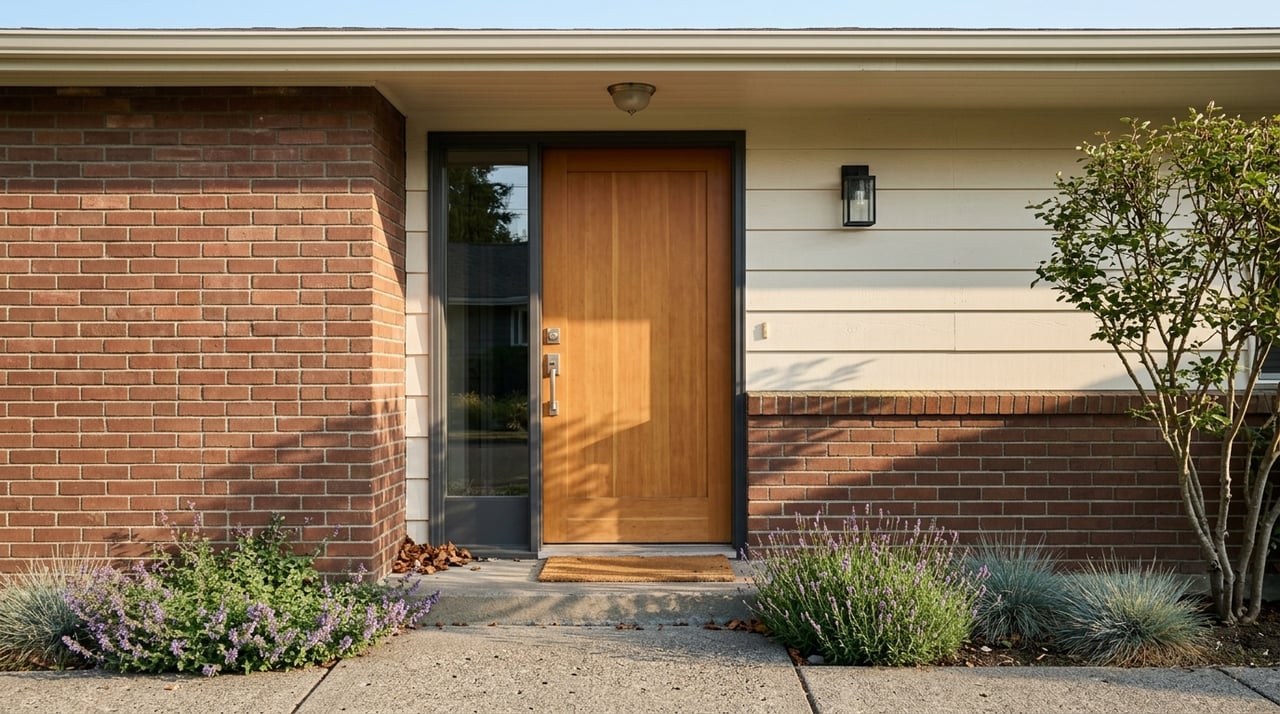
- Steel entry door replacement: 185.3%
- Fiber-cement siding replacement: 118.1%
- Vinyl window replacement: 105.8%
These numbers suggest that for many older Boise homes, curb appeal and visible condition can matter more than an expensive interior overhaul. Buyers often form their first opinion before they even step inside.
Inside the home, a minor kitchen remodel recouped 81.1% in Boise. That is much stronger than a full kitchen gut, which makes a refresh-focused kitchen strategy easier to justify for many sellers.
Some functional improvements can also make sense when they reduce likely inspection concerns. In Boise’s 2025 data, roof replacement recouped 73.7% and HVAC electrification recouped 81.6%.
Boise projects that often over-renovate
This is where many sellers lose money. If you are preparing to sell, it is easy to assume buyers will pay top dollar for every custom finish or major upgrade. Boise’s resale data suggests otherwise.
Several larger projects showed much weaker recoup rates:
- Major kitchen remodel: 49.2% to 50.1%
- Bath remodel: 46.4%
- Primary suite addition: 21.3% to 32.3%
- Solar power installation: 23.4%
- Wood deck addition: 46.6%
- Composite deck addition: 53.8%
That does not mean these projects are bad for long-term enjoyment. It means they are often poor pre-sale investments if your goal is to maximize return in the near term.
What to fix before you list
For most older homes in Boise, your pre-listing budget should go toward the issues that buyers, inspectors, and disclosure forms are most likely to surface.
Start with the basics:
- Roof condition and any known leaks
- Signs of water intrusion or moisture damage
- Electrical, plumbing, and HVAC function
- Siding issues
- Structural or foundation concerns
- Permit history for substantial additions or alterations
Boise’s seller disclosure form specifically asks about roof damage or leaks, siding issues, structural or foundation problems, hazardous materials, and substantial additions or alterations done without a building permit. Idaho law also requires sellers and real estate professionals to disclose known hazardous materials and other adverse material facts.
That is why trying to hide a problem is almost always the wrong move. If you know about an issue, it is better to address it or prepare to disclose it clearly than to spend heavily on decorative upgrades that do not solve the real concern.
What to refresh instead of fully remodel
Once the major condition items are handled, look for lower-drama updates that improve how the home shows. These are often the moves that help an older home feel inviting without turning it into a money pit.
A thoughtful refresh might include:
- Repainting worn or overly bold walls in neutral tones
- Replacing dated or damaged light fixtures
- Updating cabinet hardware
- Deep cleaning and decluttering
- Improving landscaping and front entry appearance
- Replacing an aging front door or garage door
- Addressing visibly worn flooring where needed
In the kitchen, a light refresh may be enough. If cabinets are sound, you may not need a full demolition. A minor kitchen update can often make more sense than chasing a full custom remodel right before listing.
Be careful with permits and overlay rules
If you are considering any last-minute project, timing and approvals matter. Boise’s 2025 residential alteration checklist notes that properties in historic districts, floodplains, sub-standard lots, ADUs, and hillside overlays may need prior approvals before a building permit is issued.
The same checklist notes that simple interior remodels are typically reviewed in about two weeks. That may sound manageable, but permit timing can still complicate a listing plan if you start too late or choose a project with added review layers.
For sellers, this is another reason to avoid unnecessary major work. A project that looks simple on paper can become a delay if your property falls under a special review area.
Special caution for pre-1978 homes
If your Boise home was built before 1978, lead-based paint rules may apply. EPA requires buyers and renters to receive known lead-based paint and lead-hazard information before sale or lease of pre-1978 housing.
If renovation work will disturb painted surfaces, lead-safe practices may also be required, and firms doing that work in pre-1978 homes must be certified and use lead-safe methods. If you suspect lead, or if your home has moisture, foundation, or other technical issues, it is smart to consult a qualified professional for property-specific guidance before you open walls or start sanding.
A practical checklist for selling an older Boise home
If you want a simple plan, use this order:
Step 1: Identify the real issues
Walk through your home with a critical eye. Look for leaks, soft spots, staining, cracked siding, old mechanical systems, drafty windows, and anything that may raise inspection questions.
Step 2: Gather records
Pull together receipts, permit history, and service records for major systems or improvements. If you added or altered anything substantially, confirm whether permits were obtained.
Step 3: Fix what affects confidence
Prioritize repairs that improve safety, function, and peace of mind. Buyers can live with an older finish more easily than they can overlook a roof problem or unresolved water damage.
Step 4: Improve first impressions
Choose a few visible updates that make the home feel cared for. Focus on exterior appearance, entry experience, lighting, paint, and cleanliness.
Step 5: Price for the home you have
Even a well-prepared older home does not need to compete with a fully rebuilt property on finishes alone. Smart pricing should reflect condition, location, updates, and what buyers in Boise are actually paying for.
The goal is confidence, not perfection
Selling an older home in Boise is not about erasing every sign of age. It is about helping buyers feel confident in what they are seeing. When your home presents as clean, functional, well maintained, and fairly priced, you are often in a much better position than a seller who overspent on upgrades that the market may not fully reward.
A thoughtful plan can protect your equity and reduce stress at the same time. If you want help deciding which updates are worth it before you list, Matthew Canterbury can help you build a practical, data-backed strategy for your Boise sale.
FAQs
Should I remodel my kitchen before selling an older Boise home?
- Usually, a minor kitchen refresh is easier to justify than a major remodel in Boise, since Boise’s 2025 data showed a minor kitchen remodel recouped far more than a full kitchen gut.
What repairs matter most when selling an older home in Boise?
- Roof issues, water intrusion, structural concerns, siding problems, HVAC, plumbing, electrical function, and permit-related questions are some of the most important items to address or prepare to disclose.
Are older homes common in Boise?
- Yes. Boise’s 2021 Consolidated Plan shows about 46% of owner-occupied homes were built before 1980, so older housing is a meaningful part of the local market.
Do Boise buyers expect an older home to be fully updated?
- Not necessarily. Buyers often focus more on whether the home feels well maintained, functional, and free of major red flags than whether every finish is brand new.
Should I get permits for renovation work before listing a Boise home?
- If your planned work requires permits or prior approvals, you should address that before moving forward, especially in historic districts, floodplains, hillside overlays, sub-standard lots, or properties with ADUs.
What if my Boise home was built before 1978?
- If your home was built before 1978, known lead-based paint or lead hazards must be disclosed before sale, and renovation work that disturbs paint may require lead-safe practices by certified firms.