Three well-known data providers looked at Twin Falls this spring and came back with three different stories. One said prices were essentially unchanged year over year. One said values had slipped four percent. A third said the median sale price was up more than seven percent over a rolling three months. All three were technically correct, and none of them explained why a city adding a $500 million yogurt plant expansion and its first In-N-Out feels, on the MLS, like a market taking a nap.
The short answer: new construction is doing the absorbing. The longer answer is where the buying decisions actually live.
The contradiction, in one table
Before we interpret anything, here is what the public sources are reporting for a single-family home in Twin Falls, with the window each figure covers.
| Source | Median / value | Window | YoY change |
|---|---|---|---|
| Redfin | $380,000 | 3 months ending May 2026 | +7.3% |
| Property Focus (county) | $353,300 | July 2026 snapshot | n/a |
| Zillow ZHVI | $349,471 | April 2026 | -4.0% |
| Houzeo (city MLS) | $335,000 | December 2025 | +0.02% |
Four numbers, one city, a spread of about $45,000 between the highest and lowest. The gap is not a mistake. Redfin's figure is a rolling three-month sale price weighted toward the spring closing window, when larger and newer homes tend to clear. Zillow's index is a monthly typical-value estimate that trails actual closings. The county-wide Property Focus figure pulls in outlying zips such as Kimberly (83341), where the local median sat at $459,000 over the trailing year. Houzeo's number is the plainest read of MLS sale prices in the city itself.
Put that together and the honest sentence is this: the underlying resale market in the City of Twin Falls has been roughly flat for a year, while newer and outlying inventory has pulled the composite number up or down depending on how you weight it.
What Chobani, Clif Bar, and Gemini are actually doing to demand
The demand side of the ledger looks anything but flat. Chobani announced a $500 million expansion of its Twin Falls plant that will add more than 500,000 square feet, 24 production lines, and at least 160 new jobs, bringing the facility to 1.6 million square feet and more than 1,200 employees earning wages roughly 12 percent above the regional average. Construction began in 2025 with operations targeted for early 2026.
Directly behind the Chobani and Clif Bar campuses, Summit Creek Development is building out Gemini Business Park, a 76-acre Class-A industrial park designed to hold more than a million square feet of tenant space. Summit Creek has another 56,000 square feet delivering in spring 2026 with the potential for an additional 120,000 square feet in the fall.
Retail followed. Raising Cane's opened in January 2026, Panera Bread cut the ribbon on its first Twin Falls location in May, and In-N-Out is on the way. Two hotels are under construction, one along the canyon rim and one next to the Magic Valley Mall. The city's economic development director has estimated that on any given day roughly 100,000 people are inside city limits.
That is not the demand profile of a flat market.
Why the price line went flat anyway
The reason resale prices have not moved much is that a large share of the new demand is being met by houses that did not exist a year ago. Local MLS reporting for February 2026 showed 93 single-family closings in Twin Falls County, up 4.5 percent year over year. Of those, 20 were newly constructed, a 54 percent jump in new-construction closings compared with the same month in 2025. Days on market fell to 76 from 87. Active inventory sat at 392 homes, roughly 4.2 months of supply on the county's absorption rate.
Four months of supply is textbook balanced. The city-only view is slightly tighter at 3.1 months as of the December 2025 MLS pull, with homes selling at about 98 percent of list price. In practical terms, that means a well-priced resale is still transacting cleanly, but the marginal buyer, the one who tipped the market into bidding-war territory in 2021 and 2022, is now walking down the street to a builder's model home instead of writing an over-list offer on a 1998 ranch.
The mechanism is not complicated: when builders can deliver on a twelve-month timeline and are willing to buy the rate down or throw in a fenced yard, they cap the resale market's ceiling.
Where the new inventory actually sits
If you are comparing Twin Falls neighborhoods on a screen, the price differences make more sense once you know which submarket is drawing which builder. Broadly:
- Northwest, toward the canyon. Wolverton Homes' Northern Passage is a four-phase development close to the Snake River Canyon rim, the regional hospital, and North College Road. Sunterra sits nearby off Grandview. These are the neighborhoods where buyers pay a premium for canyon access and short trips to St. Luke's.
- East side, behind Chobani and Clif Bar. Synergy Builders and other local shops are active in east-side subdivisions within a straight shot of the industrial employers on Kimberly Road. This is the geography most directly tied to the plant hiring cycle.
- South and southeast. Wolverton's Sundance sits on the south end. Moriah Falls, where builders are pushing granite, hidden butler's pantries, and LVP-throughout finish packages, is a mid-market entry point.
- Kimberly and the county fringe. Elkhorn Estates is a gated, one-acre-plus subdivision southwest of the city, and the private New Haven Subdivision sits between Twin Falls and Kimberly. The 83341 zip code around Kimberly carried a $459,000 trailing-year median, the highest in the county.
- The Preserve. A 300-plus-acre master-planned community inside the city with a pool, clubhouse, and direct access to the Snake River bike path. This is where the "new build with amenities" buyer is most likely to end up.
The interpretive point: the further from the industrial corridor and the closer to canyon or acreage, the more the resale comps decouple from the composite citywide median.
What the median actually buys right now
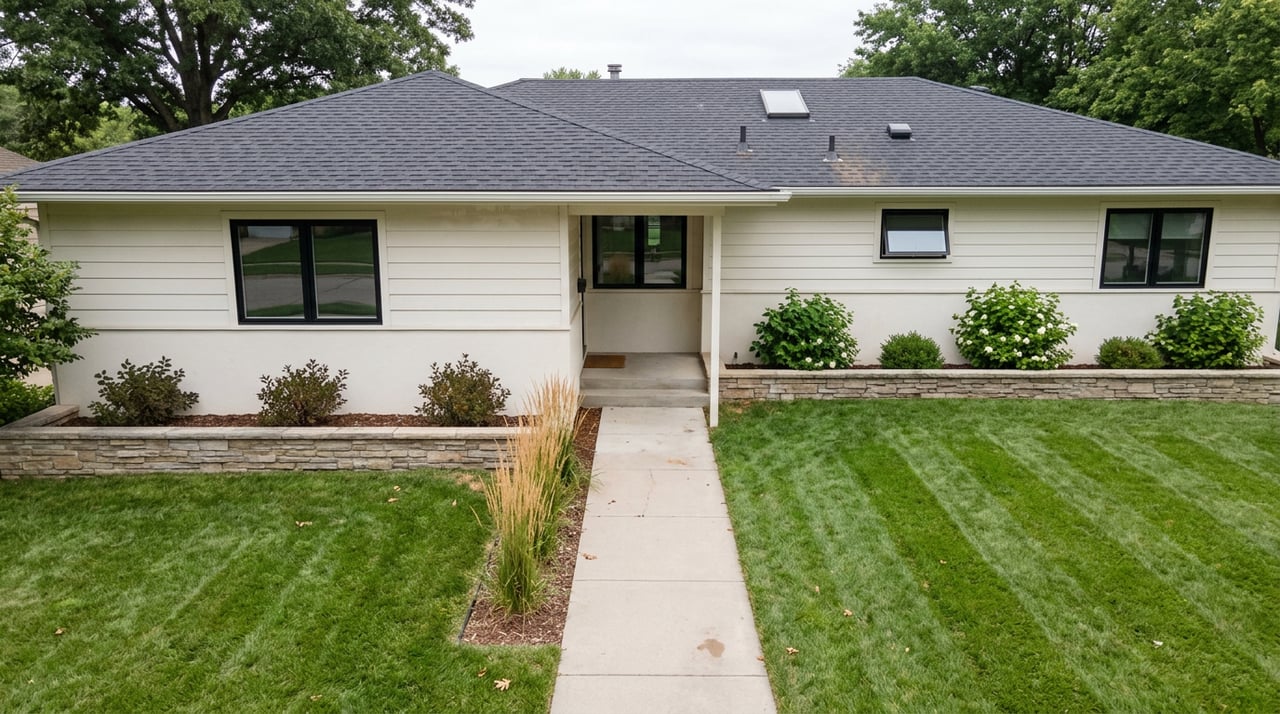
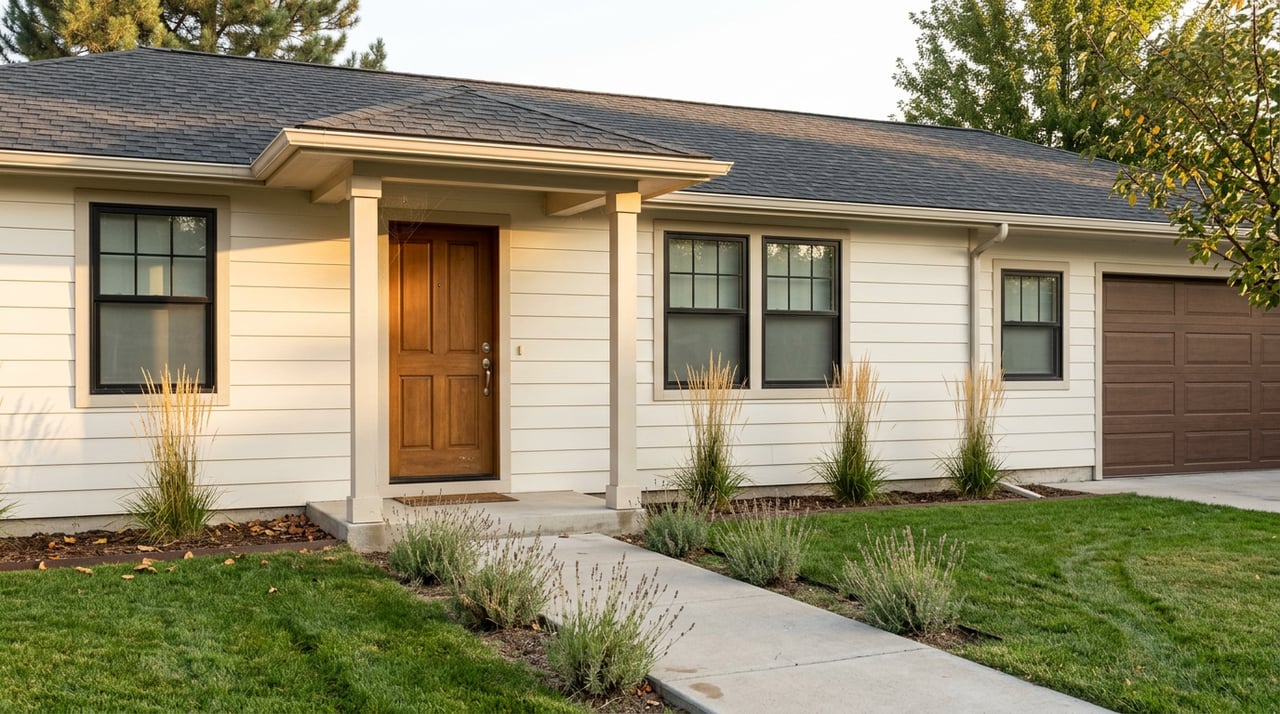
At $335,000 to $355,000, the city-wide median gets you a three-bedroom, two-bath single-level home in a mature interior neighborhood, typically 1,400 to 1,700 square feet, often on a smaller lot with the original 1990s or early-2000s finishes intact. Listings in that band are moving in about two-and-a-half months.
Step up to the high $300s and low $400s and you enter new-construction territory. Recent completions in that range are landing around 1,550 to 1,900 square feet on single-level plans, with quartz counters, ten-foot ceilings, LVP through the main living areas, and three-car garages. Buyers at this price point are typically comparing a fresh build with builder incentives against a resale that has already absorbed a full renovation cycle.
Above $450,000, especially in Kimberly's 83341 or gated fringe communities like Elkhorn Estates, the product changes again: one-plus-acre lots, RV or shop capacity, and custom builders like Kimberly Construction, Inc. taking single-home orders.
The friction that catches Twin Falls buyers off guard
Two pieces of local friction do not show up on portal listing pages.
Builder incentives compress the resale spread. When a Preserve or Sundance builder offers a rate buy-down or covers closing costs, the effective price of a new home drops below sticker. A resale seller on the same block cannot see that math without asking, and buyers who tour both often come back to the resale asking for a concession that the seller was not planning to give. Pricing a resale in this market is less about the last comp and more about the current builder offer sheet two miles away.
Appraisal timing on the flat curve. With days on market up compared to two years ago and roughly balanced inventory, appraisers are leaning on a wider sale window. If you write on a 1998 home in June and the strongest comps closed in a late-winter soft patch, the appraisal can come in under contract price even when the market feels healthy. Building a contingency window that lets a low appraisal get renegotiated, rather than kill the deal, is worth the extra day at the kitchen table.
Neither issue is unique to Twin Falls, but both are sharper here because the composite market number is misleading you about what the resale channel is actually doing.
FAQ
Is Twin Falls still a good market for a first move-up buyer? The 3.1 to 4.2 months of supply and 98 percent list-to-sale ratio suggest yes, particularly if you are willing to write on a resale during shoulder seasons when builder foot traffic is lighter.
Should I wait for prices to drop? Forecasters generally have Idaho at 3 to 5 percent statewide appreciation for 2026 with mortgage rates in the low-to-mid 6s. A flat Twin Falls resale market inside a modestly appreciating state is not the setup that usually precedes a discount.
Does buying near the industrial corridor mean I am buying a "plant town" home? Chobani, Clif Bar, and the Gemini tenants are Class-A employers on landscaped campuses, not open-air heavy industry. The east-side neighborhoods that sit closest to them are the same subdivisions where Synergy and other local builders are selling their strongest floor plans.
If you are trying to figure out which of the four medians describes the house you actually want to buy, that is the conversation we like to have. The Canterbury Group works Magic Valley submarkets, builder offer sheets, and resale comps side by side so the number on your offer matches the market you are actually in. Work With Us when you are ready to compare a new build against a resale on the same street.